ENGLISH
 ESPAÑOL
 DUTCH
 FRANÇAIS
 ITALIANO
 РУССКИЙ
 TÜRKÇE

 by Platin Yachting
Meal Planning for Guests with Food Allergies on a Yacht Charter
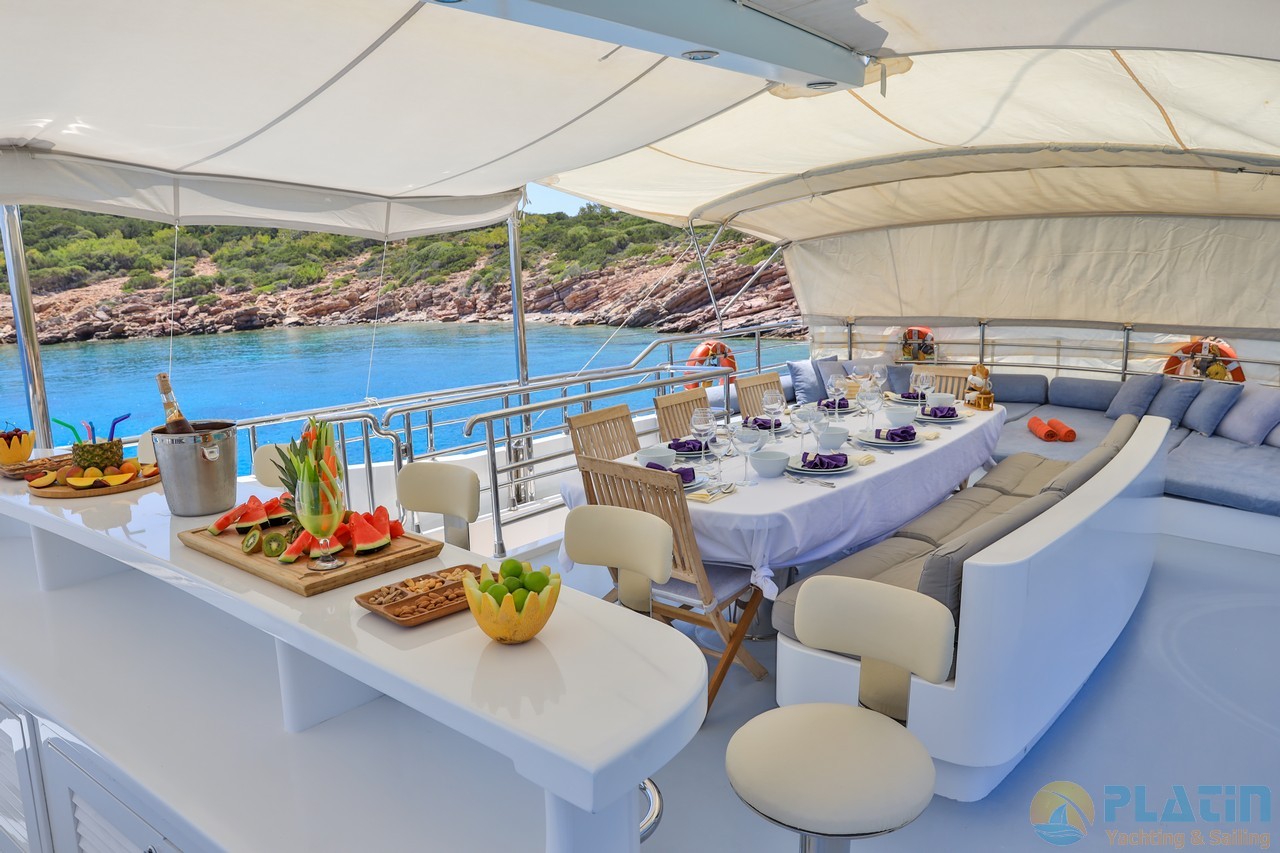
Food is an important part of a blue cruise. Breakfast on deck, a relaxed lunch after swimming and dinner at anchor are often among the most memorable moments of a yacht holiday. When someone in the group has a food allergy, however, meal planning needs to go beyond personal taste and menu preferences.
For a guest with a food allergy, it is not enough to leave one ingredient off the plate. The entire process matters: purchasing, storing, preparing, cooking and serving the food. An allergen can be transferred from one food to another in a very small amount. This is known as cross-contact and may create a risk for someone with a food allergy.
That is why dietary requirements should be discussed early in the yacht holiday planning process, before provisions are purchased and menus are finalised.
Why food allergies should be disclosed in advance
On a yacht, meals are usually prepared in a compact galley, often using provisions purchased before the cruise begins. Finding suitable products, checking labels, identifying alternatives and agreeing on a preparation routine all take time. If an allergy is mentioned only at the last minute, it may be difficult to source appropriate ingredients or assess whether the galley can meet the required precautions.
Rather than simply saying that a guest has an allergy, provide the exact food or ingredient that must be avoided. Common examples include milk, eggs, fish, crustacean shellfish, peanuts, tree nuts, wheat, soy and sesame, but food allergies are not limited to these examples.
Where relevant, the guest should explain which derivatives or related ingredients must also be avoided, based on advice from their healthcare professional. A food allergy, an intolerance, coeliac disease and a dietary preference are not interchangeable terms. Clarifying the difference helps the crew understand the actual requirements.
What information should guests share before booking?
A short written allergy brief is useful. It helps the booking team, chef and relevant crew members work from the same information rather than relying on a conversation that may later be forgotten.
- The exact allergen: Name the food or ingredient clearly.
- Relevant derivatives: Include related ingredients or forms the guest has been advised to avoid.
- Cross-contact sensitivity: Explain whether shared equipment, surfaces or cooking oil may create a risk.
- Suitable alternatives: List products the guest already knows they can safely eat.
- Emergency arrangements: Follow the personal action plan provided by the guest’s healthcare professional and bring any prescribed emergency medication with its instructions.
This information helps the yacht team understand the catering requirements and assess whether they can be met. It is not a substitute for medical advice or an individual emergency plan.
Understanding cross-contact in a yacht galley
Cross-contact occurs when an allergen is unintentionally transferred to food that would not otherwise contain it. This can happen through knives, chopping boards, pans, strainers, serving spoons, worktops, storage containers or hands. Removing visible crumbs or pieces from a dish does not reliably remove allergen proteins.
A knife used for peanut butter may transfer traces to another food if it is only wiped rather than properly washed. A work surface used for wheat flour may also transfer residue. Shared frying oil, grills and utensils can create similar concerns.
Because a yacht galley may be smaller than a restaurant kitchen, the preparation sequence and available equipment should be discussed before the charter. These measures can help reduce risk, but guests should not assume every yacht has a separate kitchen or dedicated equipment.
- Wash preparation surfaces with detergent and water, rinse and dry them appropriately before preparing the allergy-sensitive meal.
- Thoroughly clean knives, chopping boards, pans, pots and serving utensils before reuse.
- Where feasible, set aside specific equipment for the allergy-sensitive meal.
- Wash hands between tasks. Gloves, if used, should be changed between tasks and do not replace handwashing.
- Keep allergen-containing ingredients sealed, labelled and separate from other provisions.
- Prepare the allergy-sensitive meal separately, keep it covered and serve it separately.
- If cross-contact is suspected during preparation or service, do not serve the questionable meal.
How should the menu be planned?
Establish the allergen requirements and the galley’s practical limitations first, then build the menu around them. Simply removing one ingredient from a standard menu may not be enough. Sauces, marinades, seasoning blends, packaged snacks and desserts can contain unexpected ingredients.
Choose meals with traceable ingredients
Meals made with a relatively small number of clearly identified ingredients can make it easier to check what is being served. Depending on the guest’s allergy profile, suitable grilled or baked proteins, fresh vegetables, salads and appropriate side dishes may be considered. A simple recipe is not automatically safe: every ingredient and preparation step still needs to be checked.
Check sauces, marinades and packaged foods
Ready-made sauces, stock cubes, seasoning mixes, desserts and snacks may contain several ingredients. Check the ingredient list and allergen statements on the actual product packaging. Do not make assurances about products with missing labels, unclear ingredients or information that cannot be verified.
Plan breakfast, lunch and dinner separately
Breakfast can involve bread, cheese, milk products, eggs, spreads, tahini, nuts and packaged foods on the same table. The allergy-sensitive portion should be prepared and identified separately. Knives used in shared butter, jam or spread containers should not be returned to the container after touching another food.
For lunch and dinner, assess the main course, side dishes, salads and sauces individually. A suitable main dish does not automatically make its garnish or dressing suitable.
Food allergies and other dietary requirements are not the same
Planning vegetarian, vegan, lactose-free or gluten-free meals is not operationally identical to preparing food for someone with a serious allergy. A preference may often be accommodated by selecting a different dish. With an allergy, the ingredients and the way the food is handled, cooked and served also matter.
A lactose-free preference is not the same as a milk-protein allergy. A gluten-free request may be related to coeliac disease, while a wheat allergy is a different immune response. The guest’s healthcare professional should guide individual requirements.
Questions to ask when choosing a yacht and crew
Every yacht has a different galley layout, storage capacity, catering arrangement and level of chef service. When comparing gulet charter options, consider the galley arrangements as well as accommodation and onboard comfort. You can also review motor yacht charter and trawler charter options before discussing your requirements through Platin Yachting during the planning stage.
- Who prepares the meals, and is a professional chef onboard?
- Can the allergy information be shared in writing with the chef and relevant crew?
- Can ingredient labels be checked when provisions are purchased?
- Can separate or specifically cleaned equipment be used?
- Can ingredients be stored in sealed, labelled containers away from other foods?
- Will the galley use shared fryers, cooking oil, grills or serving utensils?
- Can the requested precautions realistically be followed in this yacht’s galley?
- If a requirement cannot be met, will this be explained before the booking is confirmed?
The purpose is not to demand a guarantee that the crew cannot provide. It is to establish what is genuinely possible. If the yacht cannot meet the precautions required for a serious allergy, that limitation should be discussed before the holiday begins.
Provisioning and ingredient selection
Provisions are often purchased before departure or at a planned port of call. The allergy brief should be shared before the shopping list is prepared. This gives the team time to check whether suitable products are available and avoid items with unclear ingredients.
For packaged products, read the ingredient list and allergen statements on the specific package. Products sold in different countries or under similar brand names may have different formulations. Open, unpackaged or unlabelled products can be harder to verify. If the ingredients cannot be confirmed, do not present the product as safe.
Check more than the main ingredients. Bread, biscuits, chocolate, ice cream, breakfast products, spice mixes, drinks and sauces may all need to be considered. The availability of suitable alternatives can depend on the departure port and local suppliers.
Meal service and communication throughout the charter
Safe preparation is only one part of the process. The right meal must also reach the right guest without being mixed up with other plates or serving utensils. Allergy-sensitive dishes should be clearly identified and served separately. The person preparing or delivering the food should know which guest the dish is intended for.
If the menu or purchased products change, the guest should be informed and the ingredients checked again. A written note can help the crew remember the requirements throughout the charter. Personal health information should only be shared with people who need it and with the guest’s agreement.
Emergency planning
Guests with food allergies should follow the personal emergency action plan provided by their healthcare professional. If they have prescribed emergency medication, they should bring it and follow the instructions given to them. Before departure, they should explain to the crew what assistance may be needed in an emergency. Crew members should not be expected to diagnose an allergic reaction or create a medical treatment plan.
If a serious allergic reaction is suspected, seek emergency medical assistance without delay. The yacht’s location, the nearest accessible shore point and the means of contacting emergency services should be considered as part of voyage planning. Medical decisions and medication use must follow professional medical advice.
Why the route and provisioning plan should be considered together
The itinerary can affect where provisions are purchased and whether suitable alternatives can be found during the cruise. If the yacht will spend an extended period away from larger ports, the shopping and storage plan becomes particularly important. The time available for shopping and the range of products may vary by departure port and route.
When planning a blue cruise, discuss food allergies alongside the yacht, crew and itinerary requirements. Catering arrangements vary from one yacht to another, so every special request should be confirmed for the specific booking rather than assumed to be standard.
Pre-charter checklist for guests
- Send a written list of all foods and ingredients that must be avoided.
- Explain relevant derivatives and cross-contact concerns.
- Share alternatives you already know are suitable for you.
- Ask about the chef and galley arrangements.
- Confirm that product labels will be checked during provisioning.
- Discuss whether separate equipment, preparation and service are feasible.
- Bring your personal emergency plan and any prescribed medication.
- Ask for renewed checks if ingredients or menu items change.
Frequently asked questions
Can a yacht prepare a special menu for a guest with food allergies?
It depends on the yacht’s galley, chef service, provisioning options and the precautions required for the specific allergy. Share the request before booking and confirm what can realistically be provided.
Can a yacht guarantee that a meal is allergen-free?
Galley facilities and supply chains differ. Ingredient checks and cross-contact controls may be possible, but a blanket guarantee should not be given unless the relevant conditions can genuinely be verified and maintained.
Does cooking destroy food allergens?
No. Cooking does not reliably remove food allergens. The allergen must be kept out of the meal and cross-contact must be prevented.
Are gluten-free diets and wheat allergies the same?
No. Gluten-free requirements may be related to coeliac disease or another condition, while wheat allergy is a different immune response. The appropriate precautions depend on the individual.
When should guests disclose an allergy?
As early as possible—ideally during the initial booking discussion and before menus or provisions are arranged.
Can guests bring their own food?
This should be agreed in advance, taking the yacht’s storage space, galley arrangements and charter terms into account. Personal products should also be clearly labelled and stored separately where appropriate.
Careful meal planning starts before departure
Planning meals for guests with food allergies on a blue cruise involves much more than preparing one alternative dish. It requires early communication, ingredient checks, appropriate cleaning, cross-contact precautions and a clear serving routine.
Because galley facilities differ from yacht to yacht, practical measures should be assessed honestly before the booking is confirmed. The guest’s healthcare guidance should remain the basis for individual medical requirements, and the crew should never promise precautions that cannot be delivered. Clear expectations make it easier to organise meals responsibly throughout the holiday.
When planning your next yacht holiday, share dietary requirements at the beginning of the process. Discuss the yacht, crew, route and provisioning arrangements together to identify an option that fits your needs.