ENGLISH
 ESPAÑOL
 DUTCH
 FRANÇAIS
 ITALIANO
 РУССКИЙ
 TÜRKÇE

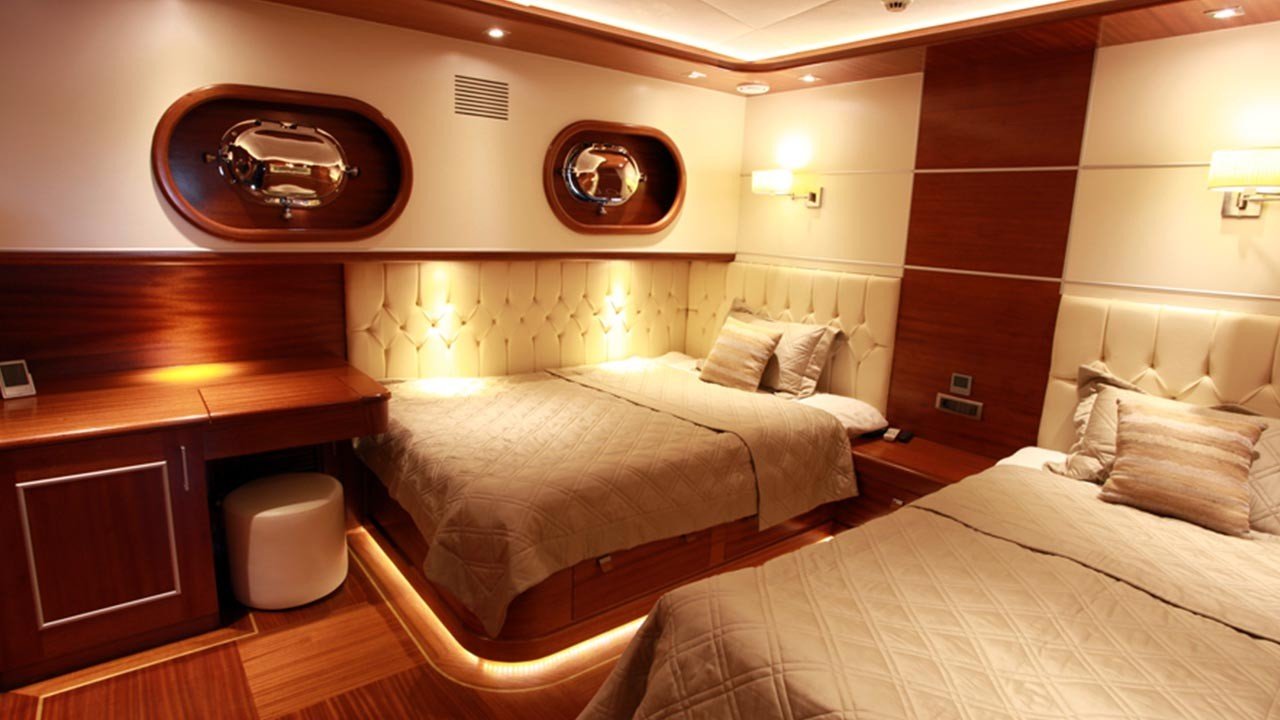
Sleeping Comfort on a Yacht: How to Enjoy a Relaxing Night in Your Cabin
When people imagine a yacht holiday, they often picture clear blue water, quiet bays, long lunches on deck and beautiful sunsets. Yet one of the details that can make the whole experience more enjoyable is often overlooked: having a comfortable place to rest at the end of the day.
After hours spent swimming, exploring the coastline and enjoying life on board, a good night’s sleep helps you wake up refreshed and ready for another day at sea. For guests who have never stayed on a yacht before, it is natural to wonder whether yacht cabins are as comfortable as hotel rooms, whether the beds are standard sizes and whether the movement of the boat makes sleeping difficult.
There is no single answer for every vessel. Sleeping comfort depends on the yacht’s design, cabin location, mattress, ventilation, air conditioning, sound insulation, lighting and the conditions in which the boat is anchored or travelling. A beautifully designed cabin may not meet every guest’s personal preferences, while a simpler cabin can feel very comfortable when its layout and facilities suit the people staying in it.
This guide looks at the main factors that influence sleeping comfort on a yacht, explains what to consider when choosing a gulet or motor yacht cabin, and shares practical tips to help you rest well during your time on the water.
Is sleeping on a yacht different from sleeping on land?
Yes, in a few ways. On a yacht, guests may notice gentle movement, sounds from the engine or generator, changing outdoor temperatures and the natural sounds of the sea. How noticeable these are depends on the vessel, its equipment, the weather, the location and whether the yacht is anchored or underway.
A yacht resting in a sheltered bay may feel very different at night from one travelling in more exposed conditions. Some people find the gentle movement of the water relaxing, while others need a little time to get used to it, particularly on their first night.
Yacht cabins are also designed around the shape and available space of the vessel. Their layout, bed dimensions, storage and bathroom arrangements may therefore differ from those of a conventional hotel room. Looking beyond photographs and checking the actual cabin details is a sensible part of choosing a yacht.
Eight factors that influence sleeping comfort in yacht cabins
1. Bed size and mattress comfort
The bed is one of the first things to consider. Yacht beds are designed to fit the vessel’s structure and cabin layout, so their dimensions and shapes can vary. In some forward cabins, for example, the foot of the bed may be narrower or the mattress may follow the shape of the hull rather than having a standard rectangular outline.
For this reason, the description “double bed” or “twin beds” may not tell you everything you need to know. If bed space is important to you, ask for the approximate dimensions and whether two guests will have enough room to move comfortably.
Mattress firmness is another personal consideration. A mattress that feels ideal to one guest may seem too firm or too soft to another. If you are planning a longer cruise, asking about the bed arrangement and mattress details before booking can help you set realistic expectations.
2. Cabin location on the yacht
Where a cabin is located can influence the way movement and sound are experienced at night. Cabins may be positioned towards the bow, stern or middle of the vessel, and each location has its own characteristics.
Depending on the yacht’s design and the sea conditions, movement may be more noticeable in some forward cabins. A cabin near the stern may be closer to the engine room or technical equipment on certain vessels, which is worth considering if you are sensitive to sound. In some designs, cabins nearer the centre may feel less affected by movement, although this is not a universal rule.
If you are a light sleeper, travelling with children or arranging a holiday for older family members, ask about the location of each cabin rather than choosing based only on the number of berths.
3. Ventilation and fresh air
Good air circulation can make a noticeable difference to the atmosphere in a cabin. Some yacht cabins have opening portholes or windows, while others rely more heavily on mechanical ventilation. An opening window is not necessarily suitable for use in every weather or anchoring situation, so follow the crew’s guidance.
A cabin that becomes warm or feels stuffy during the night may make it harder to fall asleep. Before booking, ask whether the cabin has an opening porthole or window and how ventilation is provided.
It is also worth asking the crew before leaving a cabin door open overnight. Privacy, safety and the operation of the air-conditioning system may all need to be considered. The right approach depends on the vessel and its onboard procedures.
4. Air conditioning and temperature control
Air conditioning can be an important feature during summer yacht holidays, particularly along the warmer coastlines of Türkiye. However, systems differ from one vessel to another. Some yachts allow guests to adjust the temperature separately in each cabin, while others use a shared or centrally managed arrangement.
Even when air conditioning is available, comfort depends on how it is used. A moderate temperature that feels comfortable is often preferable to setting the system extremely cold. Some guests may also find it uncomfortable if an air outlet blows directly towards the bed.
Before confirming a booking, ask which cabins have air conditioning, whether each cabin has independent controls and whether there are any usage guidelines. On some vessels, energy management or generator schedules may affect how the system is operated.
5. Noise and vibration
Sounds on a yacht at night do not necessarily come from the main engine. Generators, air-conditioning units, water pumps, refrigerators, deck activity, mooring lines and nearby vessels can all contribute to the onboard sound environment.
How much noise reaches a cabin depends on the yacht’s construction, insulation, equipment locations, maintenance and layout. It would therefore be misleading to assume that all yachts are either completely silent or noisy.
If you are particularly sensitive to sound, ask how close the cabin is to the engine room or generator. You can also ask about the usual overnight operating arrangements for the generator and air-conditioning system.
6. Lighting and privacy
The amount of natural light in a cabin depends on its windows, portholes and position. Some cabins receive more daylight, while others are naturally darker and more enclosed. Curtains, blinds or shutters can be useful for guests who prefer a dark room when sleeping.
Privacy is another consideration. A cabin window may face another yacht, a shared deck area or a part of the marina where people can pass by. Closing curtains or shutters at night helps maintain privacy and can also reduce unwanted light.
7. Storage and cabin organisation
A tidy cabin can feel more spacious and make it easier to relax. Storage arrangements vary according to the size and design of the yacht. Some cabins have wardrobes, drawers and shelves, while others offer more compact storage solutions.
Soft-sided or foldable luggage can be easier to store than large, rigid suitcases. Before deciding what to bring, however, check whether the cabin has a dedicated space for luggage.
Keeping the items you may need at night within easy reach also helps. A little organisation can prevent unnecessary movement and searching around a compact cabin when everyone else is asleep.
8. Bathroom access and layout
Some yachts have an en-suite bathroom for every guest cabin, while others may have shared facilities. Easy access to the bathroom can be particularly important at night, so it is worth confirming the arrangement before booking.
The position of the bathroom door, the shower layout and ventilation can also influence the overall feeling of space and comfort. Look at the cabin and bathroom photographs together, and ask for clarification if the layout is not clear.
Sleeping comfort in gulet cabins
Gulets are among the best-known types of boats used for blue cruises along the Turkish coast. They are available in a variety of sizes and designs, and their cabin layouts can differ considerably.
Some gulets offer spacious guest cabins, en-suite bathrooms and generous storage. Others use more compact layouts to make efficient use of the available space. Bed dimensions, cabin height, porthole arrangements and air-conditioning facilities are all vessel-specific.
The length of a gulet or its general luxury category does not, on its own, guarantee a particular level of cabin comfort. When comparing options, look at the number of cabins, the number of guests each cabin accommodates, bed arrangements and whether bathrooms are private.
You can explore available options on our gulet charter page and ask for detailed information about the cabin layout of the yacht you are considering.
Sleeping on motor yachts and trawlers
Cabins on motor yachts and trawlers vary according to the vessel’s size, purpose and interior design. Some models offer spacious master cabins, different bed configurations and private bathrooms. On smaller vessels, the emphasis may be on making the best possible use of limited space.
On a motor yacht, the location of the engines and technical equipment in relation to the guest cabins may be worth considering when assessing sound and vibration. Trawler-style vessels can have layouts designed around longer periods on board, but the actual facilities still depend on the individual model.
Rather than making assumptions based on the type of yacht, review the details of the specific vessel. You can compare options through our motor yacht charter and trawler charter pages.
Ten practical tips for sleeping better on a yacht
The cabin itself is only part of the picture. A few simple preparations can also make your stay more comfortable, especially if this is your first yacht holiday.
- Check the cabin details before booking. Ask about bed dimensions, air conditioning, windows, bathroom facilities and cabin location.
- Pack light. Soft-sided or foldable bags are often easier to store in compact cabins.
- Bring familiar sleep accessories if you use them. An eye mask or earplugs may be helpful if you are accustomed to sleeping with them.
- Use the air conditioning sensibly. Choose a comfortable setting and follow the crew’s instructions for the controls.
- Keep the cabin organised. Put the items you may need during the night somewhere easy to reach.
- Make use of curtains or shutters. Close them if you prefer a darker cabin or need more privacy.
- Ask about overnight sounds. Understanding the generator, engine and air-conditioning arrangements can help you choose the right cabin.
- Give yourself time to adjust to the movement. If you are not used to sleeping on the water, the first night may feel different. Let the crew know if you feel unwell.
- Ventilate the cabin when appropriate. Open a porthole or window only when conditions and the crew’s guidance make it suitable.
- Mention problems early. If the bed, temperature, lighting or sound is affecting your rest, tell the crew. They may be able to suggest a practical solution.
Can the movement of the sea affect your sleep?
You may notice some movement while sleeping on a yacht. How much depends on the vessel’s design, the weather, sea conditions and whether the yacht is anchored or underway. A boat in a sheltered bay may feel quite different from one travelling in more exposed conditions.
Some guests find gentle movement soothing, while others need time to become accustomed to it. Experiences vary from person to person, so it is not possible to promise that every guest will sleep in exactly the same way.
If you are prone to seasickness, discuss the planned route and expected conditions before your trip. If you begin to feel unwell, tell the captain or crew. If you are considering medication, ask a qualified healthcare professional what is appropriate for you.
Choosing a cabin for a family holiday
When travelling with children, cabin layout and sleeping arrangements become especially important. Consider whether the child will have a separate bed, whether the bed arrangement is suitable for their age, how much room there is to move around and how close the children’s cabin is to the parents’ cabin.
Some yachts may offer additional beds or alternative sleeping arrangements, but these should never be assumed. Share the children’s ages and requirements when making an enquiry, and confirm the exact arrangement for the yacht you are considering.
It is also important to follow the crew’s safety instructions about steps, narrow passages and access to the deck at night. A cabin that works well for one family may not be the best choice for another, so discuss your needs before booking.
Questions to ask before booking a yacht cabin
Photographs can give you a useful impression of a yacht, but they do not always show every detail that affects sleep. Before confirming your booking, consider asking:
- What are the dimensions and type of bed in the cabin?
- Is the cabin located towards the bow, stern or centre of the yacht?
- Does the cabin have air conditioning, and can guests adjust it independently?
- Does the cabin have an opening window or porthole?
- How close is the cabin to the engine room or generator?
- Does every cabin have its own bathroom?
- Is there enough wardrobe and luggage storage space?
- Are there any overnight arrangements for the generator or air conditioning?
- How might the experience differ when the yacht is anchored and when it is underway?
The answers will vary from one yacht to another. The goal is not to find a universal specification, but to understand the actual facilities on the vessel you plan to charter.
Frequently asked questions about sleeping comfort on yachts
Is it comfortable to sleep on a yacht?
It can be very comfortable, depending on the yacht’s design, bed, cabin location, ventilation and sea conditions. Choosing a cabin that suits your preferences and checking the facilities in advance can make a difference.
Are yacht cabin beds standard sizes?
Not always. Bed dimensions and shapes can vary to fit the yacht’s layout. Some forward cabins may have beds that narrow towards one end. Ask for the measurements before booking if bed size is important to you.
Do yacht cabins have air conditioning?
Many charter yachts offer air conditioning, but availability and controls vary. Confirm which cabins have it, whether the temperature can be adjusted separately and whether there are any operating guidelines.
Can you hear the engine at night on a yacht?
That depends on the vessel’s design, insulation, location of the engine and generator, and overnight operating arrangements. If you are a light sleeper, ask how close the cabin is to technical equipment.
Which part of a yacht is best for a cabin if I am sensitive to movement?
On some vessels, cabins closer to the centre may feel less affected by movement. This is not a guarantee, as hull design, weather and sea conditions also matter. Ask the charter team about the specific yacht.
Are all gulet cabins equally comfortable?
No. Cabins may differ in size, location, bed layout, windows and bathroom facilities. Review each cabin’s details rather than assuming that all cabins on the same gulet are identical.
Should I bring my own pillow or bed linen?
Bed linen is commonly provided on charter yachts, but the exact arrangements depend on the vessel and charter package. If you prefer a particular pillow or have a specific requirement, ask before departure.
What should families consider when choosing yacht cabins?
Consider the children’s ages, bed arrangements, proximity to the parents’ cabin and safe movement around the cabin. Confirm the exact layout with the yacht’s plan or charter team.
Can seasickness make it difficult to sleep?
People who are sensitive to movement may find the first night challenging. The experience depends on personal sensitivity, the vessel and sea conditions. Tell the crew if you feel unwell, and seek professional advice before using medication.
The right cabin is part of a memorable yacht holiday
Sleeping comfort on a yacht is about more than having a good mattress. Cabin location, ventilation, air conditioning, sound, lighting, storage and bathroom layout all contribute to the experience. Understanding these details before booking helps you choose a vessel that matches your expectations.
At Platin Yachting, we encourage guests to consider the practical details of life on board as carefully as the route and the yacht’s overall style. Explore the available options through Platin Yachting and speak with our team about the cabin arrangements and facilities of the yachts you are interested in.
The best yacht holiday is one where you can enjoy the sea and the coastline throughout the day, then return to a cabin where you can relax and recharge for the next morning. Choosing the right yacht and the right cabin is an important part of making that experience your own.