ENGLISH
 ESPAÑOL
 DUTCH
 FRANÇAIS
 ITALIANO
 РУССКИЙ
 TÜRKÇE

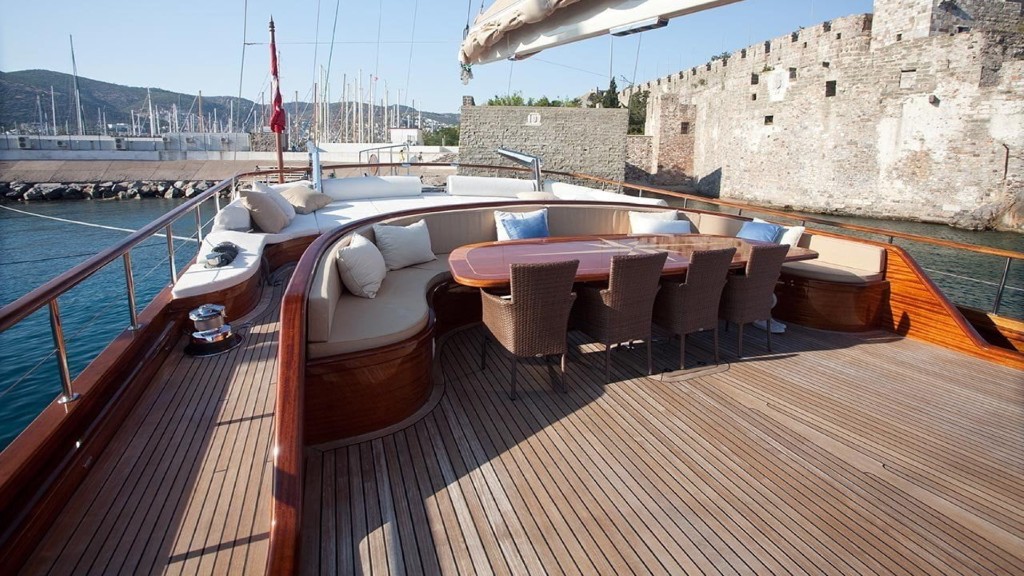
How Many Hours Do You Cruise Each Day on a Blue Cruise?
A day at sea is not a day spent constantly under way. You may leave after breakfast for a nearby bay, pause for lunch and swimming, then make one more short hop before sunset. Here is what a realistic cruising day in Turkey actually looks like.
How Long Does a Blue Cruise Sail Each Day?
You will often see “up to four hours of cruising per day included” in a gulet charter proposal. That is usually a fuel and engine-use allowance, not a promise that the yacht will run for four uninterrupted hours every day. The exact wording and calculation depend on the individual yacht.
A well-designed yacht charter in Turkey leaves enough time to swim, dine, explore ashore and enjoy the boat. Covering the greatest possible distance is rarely the point.
What Counts as Cruising Time?
Cruising time is the period during which the yacht is moving from one anchorage or port to another. If you leave a bay at 9:00 and drop anchor at 10:30, you have cruised for about 90 minutes. A second 45-minute hop after lunch brings the day’s total to two hours and 15 minutes.
It does not include breakfast at anchor, swimming, lunch, paddleboarding, a village visit or a quiet afternoon on deck. This distinction matters: a two-hour cruising day still leaves most of the day free.
Seven Things That Shape Your Daily Cruising Time
1. The route and the distance between anchorages
Not every itinerary has the same rhythm. The bays around Göcek are close together, while routes extending from Fethiye towards Kaş and Kekova include a few more substantial legs. Browse our gulet charter routes to compare the regions.
2. Yacht type and economical cruising speed
A traditional gulet, a trawler and a motor yacht will not cover the same distance in the same time. A motor yacht may be capable of high speed, but comfort, sea state and fuel consumption usually determine the practical speed for each leg.
3. Weather and sea conditions
Wind direction, waves and visibility can change the day’s plan. Your captain may leave early to use calmer water or recommend a sheltered alternative. That is not a failed itinerary; it is sound seamanship.
4. The way your group likes to travel
Some guests enjoy waking up somewhere new each morning. Others would happily spend two nights in the same peaceful bay. Families with young children, first-time charter guests and anyone sensitive to motion often prefer shorter legs.
5. Swimming, meals and time ashore
An archaeological visit, a long lunch or a sunset stop can be more memorable than adding another destination. The best route is built around the experience, not only the mileage.
6. Port and customs procedures
On Greek island itineraries, check-in, check-out and port formalities take time in addition to the sea passage. A short line on the chart can therefore occupy a larger part of the day.
7. The fuel terms in your charter agreement
Some yachts include a defined amount of standard engine use, while fuel on many motor yachts is charged according to consumption. Our guide to why fuel is sometimes included and sometimes excluded explains the distinction.
Gulet, Motor Yacht or Trawler: Does the Yacht Change the Schedule?
| Yacht type | Cruising character | Best suited to | Typical budget effect |
|---|---|---|---|
| Gulet | Unhurried, scenic and usually planned around short or medium legs. | Families and friends who see the passage itself as part of the holiday. | A standard daily engine allowance is often included, subject to the yacht’s terms. |
| Motor yacht | Covers distance quickly and offers considerable itinerary flexibility. | Guests who want to see more coastline within a limited week. | Higher speed and larger engines can make fuel a significant additional cost. |
| Trawler | Stable, comfortable progress at an economical cruising speed. | Guests seeking modern comfort with a relaxed long-range feel. | Fuel may be included or excluded according to the yacht’s package. |
What Does “Four Hours of Cruising per Day Included” Mean?
This phrase is common in gulet charter terms. It generally means that fuel for up to four hours of standard main-engine operation per day is included in the charter rate. Some contracts treat it as a firm daily cap; others calculate an average across the charter.
A two-hour day followed by a five-hour passage may be possible if it fits the yacht’s weekly allowance and the captain approves the plan. A route requiring consistently longer engine use, or a request to cruise at a higher speed, may result in extra fuel charges.
- Ask whether the allowance is calculated daily or across the whole week.
- Check whether generator and tender fuel are treated separately.
- Request an estimate if your proposed route exceeds the standard allowance.
For the wider budget picture, read our guide to hidden and additional yacht charter costs in Turkey.
How to Calculate Cruising Time from Nautical Miles
This is a planning estimate rather than a guaranteed arrival time. Harbour manoeuvres, wind, currents and safe course adjustments all affect the real result.
| Example passage | Approx. distance | At 8 knots | At 10 knots | At 12 knots |
|---|---|---|---|---|
| Fethiye–Göcek | 12 NM | 1 hr 30 min | 1 hr 12 min | 1 hour |
| Kaş–Kekova | 13 NM | 1 hr 38 min | 1 hr 18 min | 1 hr 05 min |
| Kalkan–Kaş | 15 NM | 1 hr 53 min | 1 hr 30 min | 1 hr 15 min |
| Datça–Knidos | 22 NM | 2 hr 45 min | 2 hr 12 min | 1 hr 50 min |
| Fethiye–Kalkan | 40 NM | 5 hours | 4 hours | 3 hr 20 min |
Our full nautical-mile distances and cruising-times guide includes further route-planning examples.
What Might a Seven-Day Cruising Rhythm Look Like?
This is an illustration of a balanced week, not a fixed itinerary. Your embarkation time, route, yacht and weather will shape the final plan.
| Day | Approx. cruising | Possible rhythm |
|---|---|---|
| Day 1 | 0–1 hour | Boarding, safety briefing and a short move to the first anchorage. |
| Day 2 | 1–2 hours | A morning hop followed by a long swim and lunch. |
| Day 3 | 2–3 hours | Two comfortable legs leading into a new cruising area. |
| Day 4 | 3–4 hours | The week’s longer passage, often with an early departure. |
| Day 5 | 0.5–1.5 hours | A slower day for swimming, watersports and a nearby cove. |
| Day 6 | 1.5–2.5 hours | Two scenic stops while turning towards the return area. |
| Day 7 | 1–2 hours | Positioning near the disembarkation port for the final night. |
Which Turkish Cruising Areas Work Best for Short Days?
Göcek and Fethiye: easy, short hops
The concentration of sheltered anchorages makes it easy to build a route with minimal engine time. It is a particularly friendly choice for families and first-time charter guests.
Marmaris, Bozburun and Datça: a balanced pace
These areas can combine quiet bay days with a handful of longer scenic passages. You can experience different landscapes without forcing the itinerary.
Fethiye to Kekova: rewarding, with longer legs
Kaş, Kalkan and Kekova are rich in scenery and history, but the distances normally require one or two longer days. That trade-off is worthwhile for many guests, provided it is discussed before booking.
Planning for Children or Motion Sensitivity
A route made of short, sheltered legs is usually better than trying to cross a large section of coast every day. Keep the first days gentle, schedule exposed passages for calmer morning conditions and tell the captain about motion sensitivity before departure.
- Ask for two short legs instead of one continuous four-hour passage.
- Avoid planning a bumpy transfer immediately after a large meal.
- Consider stability and usable deck space, not just the number of cabins.
- Keep the wish list flexible; more destinations do not automatically make a better holiday.
Do Blue Cruise Yachts Travel at Night?
Night cruising is possible when necessary and when the yacht is equipped and operated for it. On a typical Blue Cruise, however, daytime passages allow guests to enjoy the coast and evenings are spent safely at anchor. Distance, weather windows or port schedules can occasionally make a night passage sensible. The captain has the final say.
Why Can the Captain Change the Itinerary?
A pre-charter route is an informed plan, not an unchangeable promise. Wind, anchorage congestion, port conditions and guest comfort may lead the captain to suggest a comparable alternative. Safety comes first, and an experienced crew can often turn a route change into one of the week’s most memorable discoveries.
Frequently Asked Questions
Does a Blue Cruise move every day?
No. If the itinerary and conditions allow, you may spend a full day in the same bay. A no-cruising day can be a highlight of a relaxing charter.
How many hours does a gulet cruise each day?
Many relaxed itineraries involve about 1–3 hours of actual movement on most days. Longer routes can include 3–5-hour passages.
Must four included hours be used in one continuous trip?
No. Cruising can be split between morning and afternoon. The contract determines whether unused or additional hours are averaged across the week.
Can breakfast or lunch be served while cruising?
Yes, in suitable conditions. In rougher water, the crew may prefer to serve meals at anchor for comfort and safety.
Will extra cruising create an additional charge?
It may if you exceed the fuel or engine-use allowance in your agreement. The calculation varies by yacht.
Does a faster motor yacht always shorten the day?
It can shorten the sea passage, but harbour manoeuvres, speed restrictions, weather and the agreed fuel budget still shape the schedule.
Can guests change the route during the charter?
Usually yes, as long as safety, weather, port rules and the agreed return point permit it.
Can I receive a daily cruising plan before booking?
Yes. It will be a provisional plan subject to weather and sea conditions, and it becomes more accurate once the yacht is selected.
Let Us Design the Right Pace for Your Charter
Would you rather linger in nearby bays or explore a longer stretch of the Turkish coast in one week? Platin Yachting can match the yacht, route and realistic daily cruising time to your group and budget.